
Sound & Society
Hi, I’m Otto and this is my personal blog that explores the way society shapes us - through culture, history and music. I’ll be sharing the views of how these three things shape how I see the world through books, blogs and podcasts.
This place is a collection of ideas, discoveries and questions I have as I explore this topic, so don’t expect polished essays!

Who am I?
My name is Otto and I’m from Thailand, currently studying Music, Psychology and Business in the UK. I enjoy singing, playing the piano and reading psychological books. So, this blog will be a way for me to review the different types of activities I’ve done and books I’ve read.

Book Reviews
I am a 6th Form Student/ Junior who loves reading, and tries to find time to read whenever I am free. I aim to read at least 20 minutes a day, most of the time is before bed. I read various styles of books and I try to find new books to read whenever I finish one.
This section will be about the personal reflections and reviews of books I’ve read recently, and how these books helped shape and develop the person I am today. Where most the books will dive into the topics of Non fiction Psychology, Music and self-help, and each section will not only be about the reviews of the books but also about whether it has personal connections to my experiences. On some of the self-help books I might also do a follow up review if whether I have implemented the techniques and skills learnt from the books
In addition, there will also be fiction books that I’ll review and link to the themes of Psychology or Music or Society, if applicable. I’ll also focus on how the stories, characters or world-building resonates with me and my passions.
With this section, I hope to create a space where I can explore and share my passion in reading whilst sharing recommendations with others who might also be interested in the styles and genres I enjoy reading!
Goodreads
"The more that you read, the more things you will know. The more that you learn, the more places you'll go." - Dr. Suess
ATOMIC HABITS by James Clear
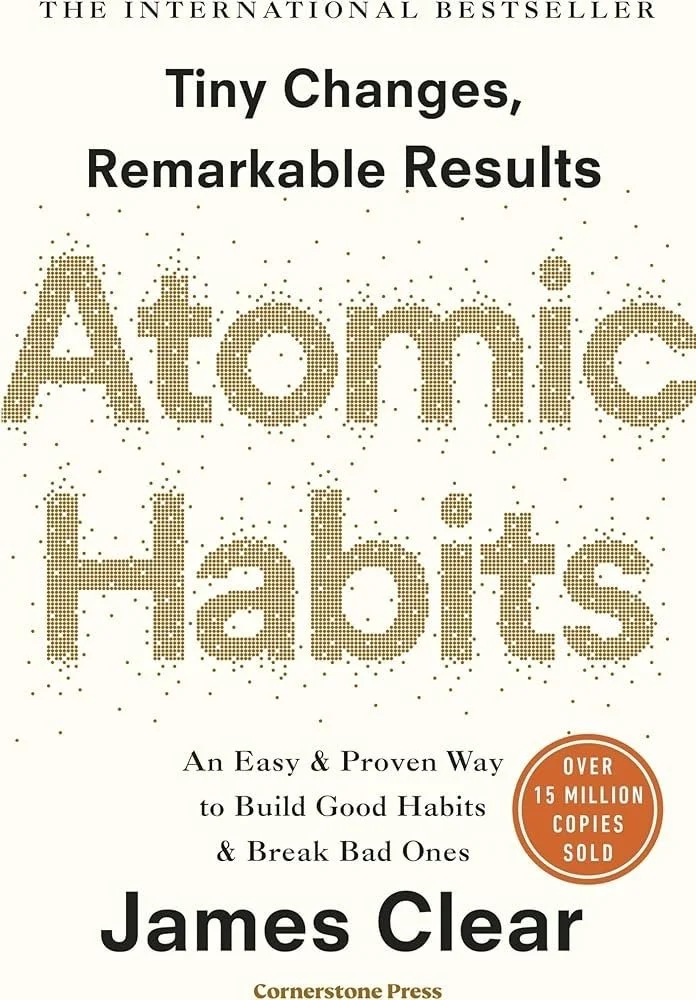
When the topic of non-fiction books is mentioned, the first book that comes to mind is Atomic Habits by James Clear. This book was one of the first self-help books I’ve ever read, I read this book during the summer of 2024, as during that time I had a sudden urge to improve and develop myself and to become a ‘new’ person after the summer break.
Whilst I was reading this book, I really enjoyed the body of the book and how it was structured and written to engage with the readers and even having a website for readers to log their habits and having a 30-day step-by-step guide for readers to apply to. However, my 2024 self thought that reading the book was enough to change who I am and become a ‘new’ individual, but that’s wrong. The first few weeks, I did not follow the instructions taught by Clear at all and I was still the same person I am everyday, doing the same bad habits like recklessly scrolling or not making my bed. But then, one day I questioned myself, asking myself is this really how I wanted to be living - wasting my summer - and falling into the same repeated patterns despite knowing I can change? This made me realised that reading Atomic Habits was not enough, but I also had to apply these skills and lessons to my life.
Therefore, I first implemented one of the chapters to my life, this being Chapter 5: Walk Slowly, but Never backward. Where this chapter emphasises on making small but continuous consistent improvements in life, and with this I no longer rely on sporadic bursts of motivation to practice piano, but I create small consistent structured times that requires me to practice (every Wednesday afternoon 2pm to 3pm). By allocating at least one hour a week of piano practice it has allowed me to continue to develop as a pianist. In addition, you may be thinking 1 hour a week is very little, but following Clear’s Chapter 5: The Best Way to Start a New Habit, this suggests that the best way to start a habit is to make it effortless. So, this one hour of piano is very little but the more I practice, the more I want to continue playing even more which then further improves my musical ability.
Moreover, beyond focussing on the habits I implemented, Atomic Habits has also made me more aware of behavioural patterns that shape our society. Where James Clear suggests that habits are formed and behaviours are influenced by the environment around them. This made me reflect upon how society perceives music, e.g. how trends in music such as pop are often influenced by the constant repetition from the media, making listeners become more familiar both consciously and unconsciously. So, reading this book has also gave me an insight to the central idea of how music is marketed and produced in order to gain widespread popularity.
Happiness Hypothesis by Johnathan Haidt
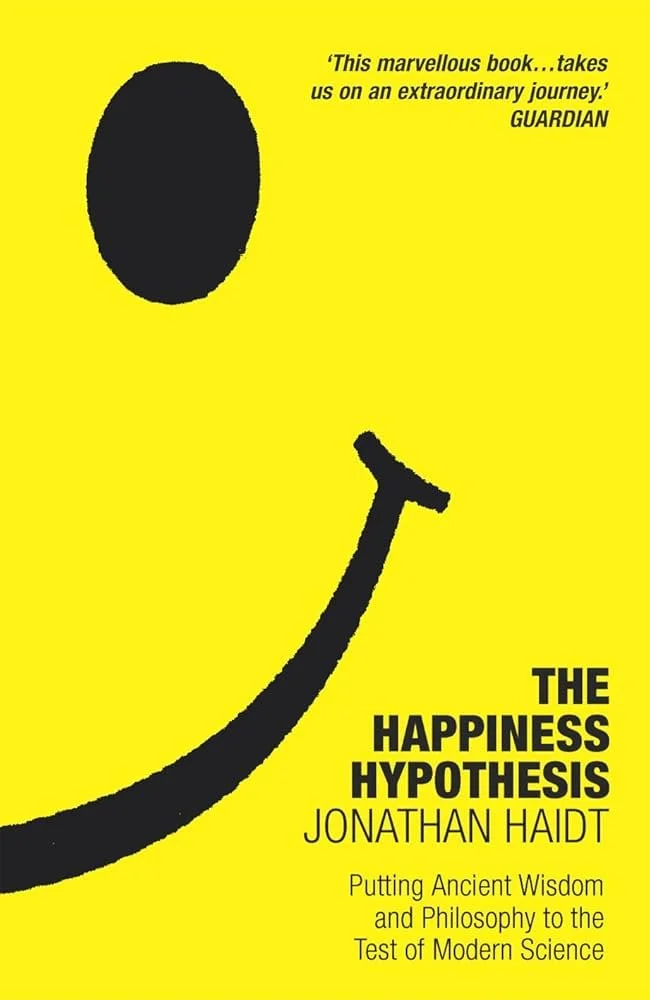
This is one of the most enjoyable and relatable books I’ve ever read.
The book connects scientific and psychological research alongside philosophy and Buddhist roots. I like how he bridges ancient teachings and modern science together, aligning the works of thinkers like Buddha, Plato, and Nietzsche to contemporary psychological findings. He uses all this evidence and perspectives to explore happiness and morality. I also love Haidt’s analogy of the rider and the elephant, where the metaphor compares decision-making to a rational driver struggling to steer a powerful elephant that represents our conscious mind and instincts. This analogy not only resonates with my daily life but also in terms of music production, in which I have only just started to gain experience. Structured practices for me (every Wednesday afternoon) seem to be something that is controlled by decision-making (the rider), requiring rational control, whilst creativity in music production feels more like an instinctive and expressive task that requires intuitive creativity (the elephant). So, Haidt’s idea of the rider and the elephant made me think about how ‘great’ music, like happiness, does not rely solely on logic and musical rules or fully on emotions. Still, it is about the balance between the two components together to create music.
I recommend this book to people who are interested in psychology and philosophy, and people who wish to understand themselves more. This book is not an abstract book that is difficult to read, but it is very easy and gives readers insightful metaphors that anyone could relate to. J’d especially recommend it to people who wish to work in the creative industry, such as music, as it helps you approach challenges, not with stress, but with curiosity; this mindset shift can make all the difference.
48 Laws of Power by Robert Greene
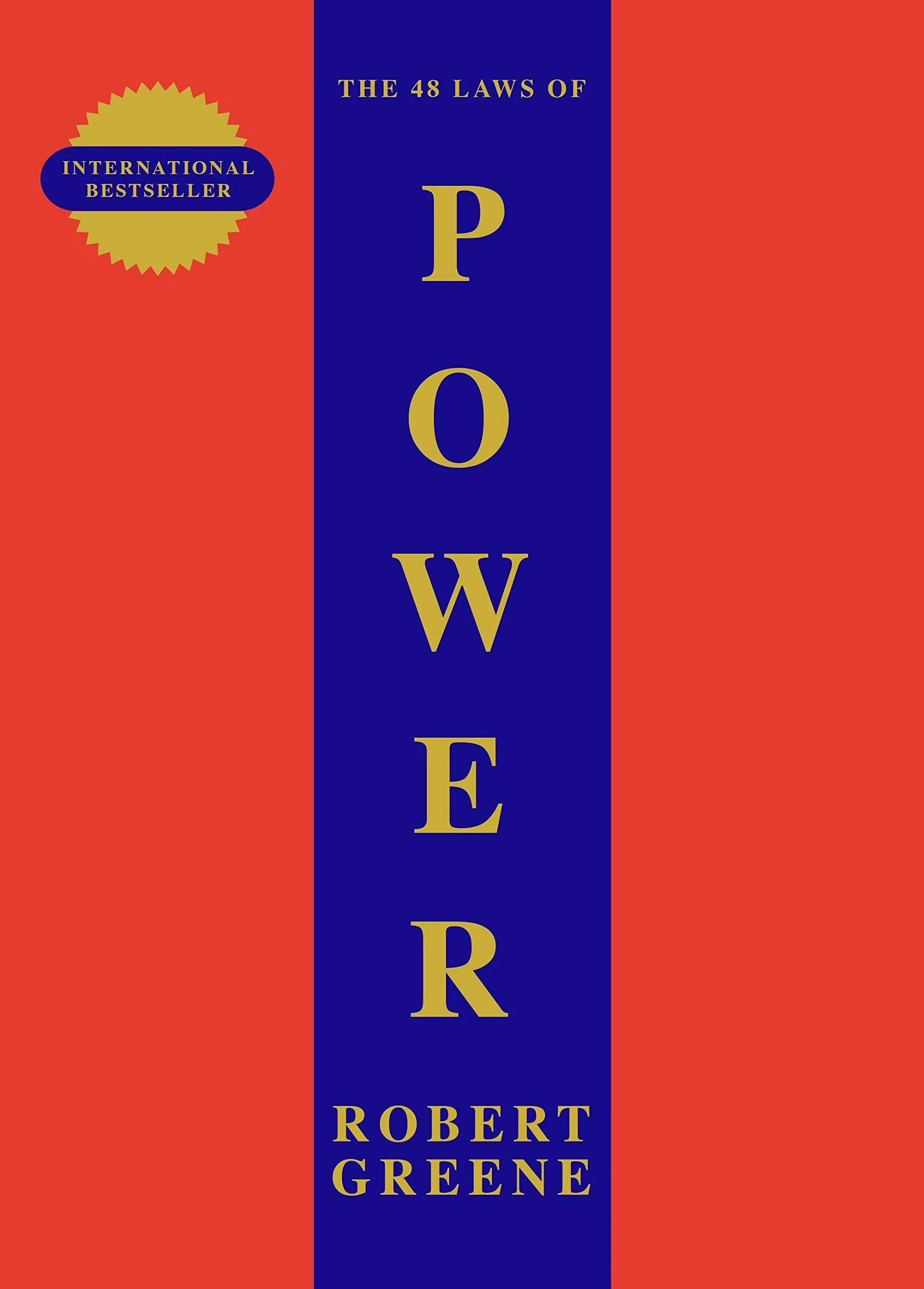
This is a bold and controversial book that I picked up when I wanted to find motivation. I went onto YouTube and found many YouTubers recommending this book, that’s why I gave it a try. Reading this book felt like psychology revision with stories. Each chapter gave very specific and vivid anecdotes, some a bit distracting, but most anecdotes give an insightful lesson. I think this book is very well-structured, with each law laid out clearly, making them very memorable.
One law that stood out to me is Law 6: Court Attention at All Costs. This law is all about visibility and how individuals have to be seen and heard to form a distinguishable and unique presence, stating that standing out from the crowd is better than fitting in, even if it means being controversial. I think this law fits me in terms of someone who wants to work in the creative industry, especially music. No matter how talented you are, if your talent remains unnoticed, you will not go anywhere. Therefore, this law acts as a reminder for me to build an identity and character different from others, which could be the different sounds made in music or the way I display myself on stage.
This law also willingly fits in with the meaning of this blog. Speakers like Martin Luther King Jr., Bob Dylan, and Billie Holiday could have the most meaningful ideas and messages towards the public, but if their messages weren’t heard, they wouldn’t create any impact in the world. These artists and activists’ words cut through all barriers to the public, making their messages clear and meaningful. Therefore, this is the reason why their words, either through speeches or music, were able to command the attention of the public. This shows that controversy isn’t always a flaw, where it is sometimes a necessity to navigate through social change, so challenging the status quo often has to be loud and heard.
Lastly, this law reminds me that attention isn’t always about using ego and pushing yourself forward for other people to see, but it is a tool. A tool that, when used with intention, can turn music, speeches and/or performance into a powerful message that can evoke transformation.
So this book blends the learnings of psychology, strategy and ethics. Where it doesn’t tell you how to be a good person, but tells you how to be authoritative and how power works, whether people like it or not. It offers insights to how the public views different types of people and how influence could be made, and the book has helped me see how attention and perception often shape who is heard and who isn’t. Whether you agree with Greene’s views or not, his messages will make you questions the antics of different people in society and think critically about how individuals behave in the world.
Dylan Goes Electric! by Elijah Wald
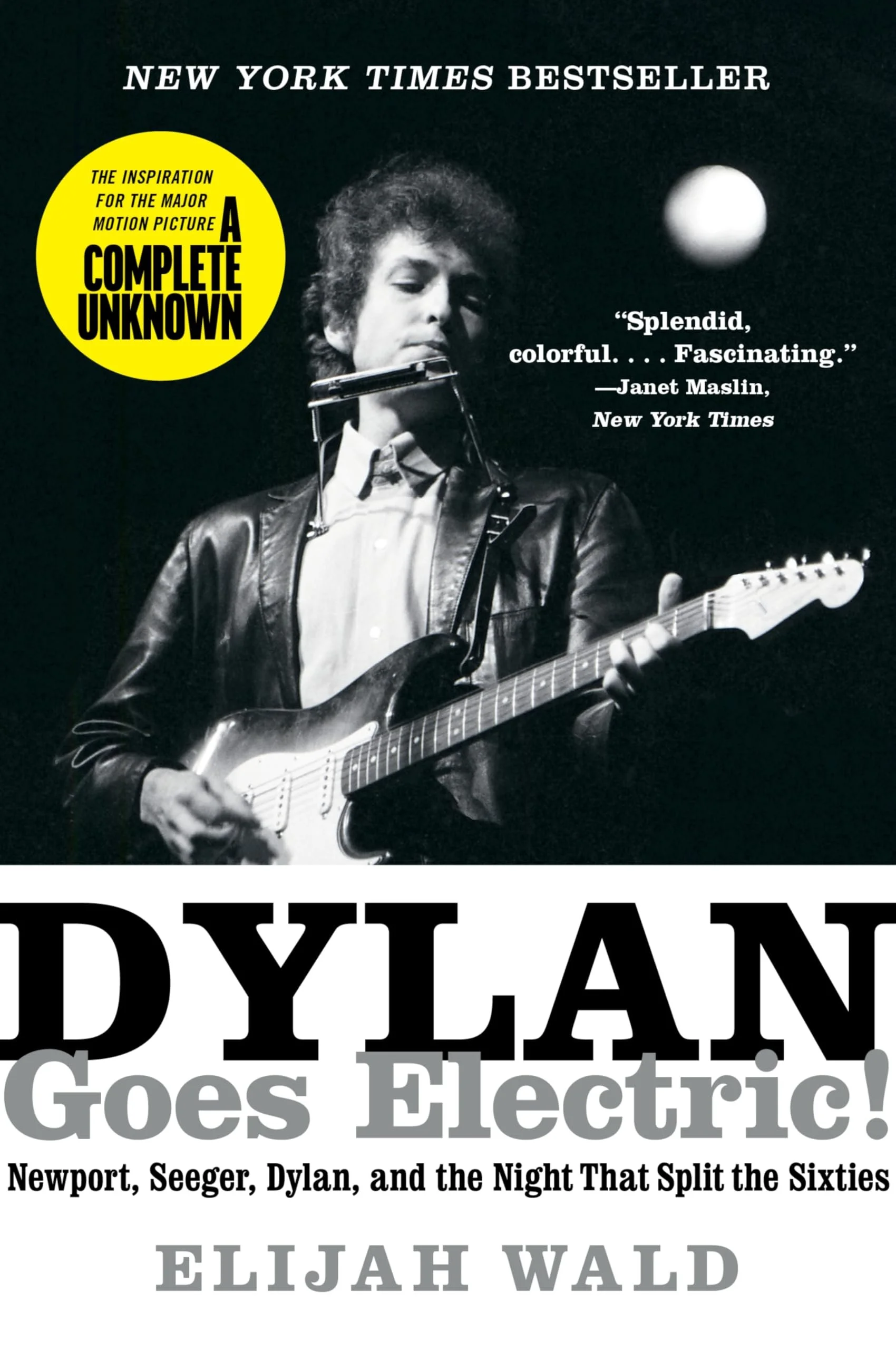
I picked up this book after watching the Academy Award film ‘A Complete Unknown’. This was because I was interested in how the events at the Newport Folk Festival turned out, where Bob Dylan turned up in black jeans, black boots and a black leather jacket, with an electric guitar, which shocked the traditional acoustic crowds of the Newport Folk Festival.
This book gave me more in-depth insights towards Bob Dylan’s life than the movie. It also cleared any misunderstandings or rumours made in the movie, such as Pete Seeger wielding an axe to tear down the electric cables as Dylan was performing in the 1965 Newport Folk Festival, where it stated that Pete Seeger was asking for an axe and did not have an axe. I was also able to understand the full context of why Dylan decided to change towards an electric rock type of music, which wasn’t clearly explained in the movie. This was because Bob Dylan wanted to experiment with a new style of music as he believed the Folk music inside and outside of him was fading away, which was why he switched to electric.
I chose this book because after watching the movie, I knew this book wasn’t just going to be another biography of Dylan; I knew that this would give more thorough information on why society acted the way it did back then, and how Bob Dylan and other musicians like Pete Seeger and Joan Baez were able to influence society using their music. Music was a big part of American society during the 1960s-70s, which is why folk audiences at the Newport Folk Festival did not approve of Dylan’s rock playing. I wanted to know how Bob Dylan was able to regain his love and fame after defying the folk audience's expectations, and I found that the reason Bob Dylan was able to regain the love and fame from the audiences was through his resilience to never stop. He continued making rock and mainstream pop music rather than folk, and eventually gained a gold record in August 1967, then platinum in August 1997. Therefore, this album became Bob Dylan’s most famous album. After all of this, it seemed like all of Dylan’s controversy that sparked from the Newport incident had suddenly disappeared; this could be due to social cryptomnesia.
Reading this book not only gives me insight into Bob Dylan’s career, but it also provides me with further sociological knowledge. It showed me how music can both divide audiences by challenging societies and eventually reshape and redefine culture itself. Dylan’s story proves that changing artistic direction at first isn’t always accepted by the audience, but with time, these changes often become new traditions in society.
The Mozart Effect by Don Campbell
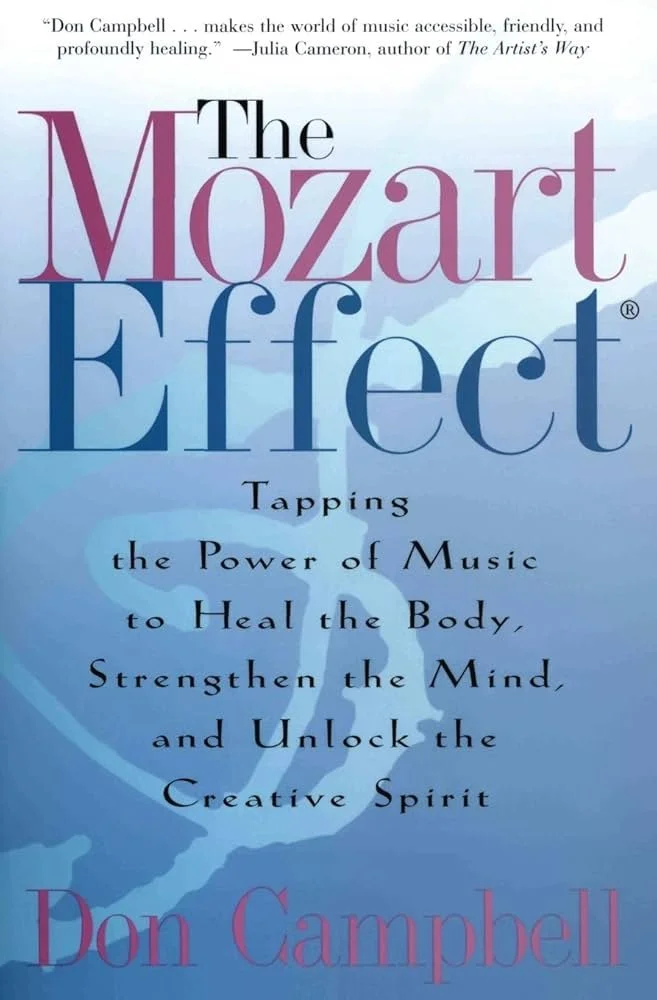
I was recommended this book by my high school college advisor. This book is very theoretical at the start, as Don Campbell explains the origins of the ‘Mozart Effect’, where he introduces scientific and medical studies behind it. He then explains the works of Dr. Alfred Tomatis, who was the inventor of the electric ear. This was designed and adapted to treat individuals with learning disorders. He found that it is possible to correct a listening or learning problem by engaging the muscles in the ear that are involved in distinguishing hearing and learning, called the stapedius. This method uses filtered high-frequency recordings of Mozart, Gregorian chants, and the spoken voice, and the stapedius muscle needs to exert tension towards three small bones in the middle ear to hear these high-frequency recordings. As tension is exerted on these bones, the physical ability to listen will improve.
After reading these chapters, it became the first time I recognised music, as not just a sound for entertainment, but as therapy, a healing device and a stimulant for development. This, therefore, opened my eyes to the possibility of studying music as something with psychological and sociological significance.
Then Campbell expands the book beyond Dr Tomatis, talking about how music can be applied to our everyday lives and the optimal way to listen to music. E.g. using earphones can be damaging to the ear, so whenever listening to music, headphones are better for our ears. Next, Campbell also explains how different types of music genres can help with specific tasks. E.g. Mozart or Classical and Baroque music can help with more concentrated tasks, and in contrast, upbeat, rhythmic music can help with physical activities, or slower, relaxing jazz music could help with reducing stress and anxiety.
3 Shades of Blue by James Kaplan
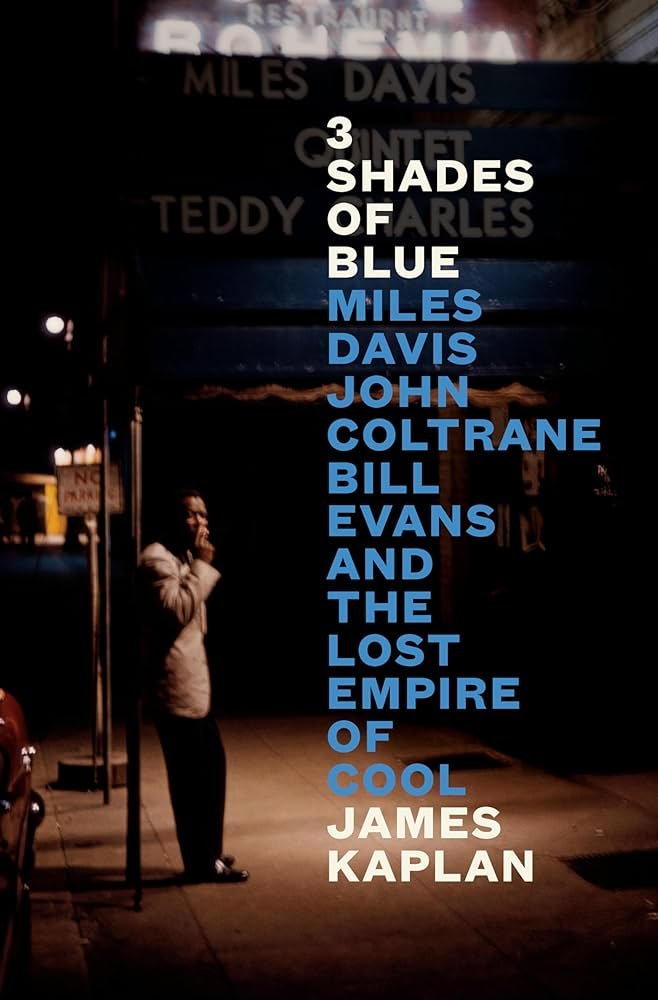
This book is another non-fiction book that I found very interesting. This book was a biography of three of the greatest jazz musicians of the late 20th century: Miles Davis, John Coltrane and Bill Evans. This book was very in-depth, featuring direct interviews with Miles Davis and his student(s), on the lives of these three musicians before, during and after they collaborated on the number-one-selling 1 jazz album of all time, Kind of Blue. James Kaplan created a very detailed biography of all three musicians, and he also described the rise and fall of ‘Cool’ jazz, a jazz style distinctive to Davis, Coltrane and Evans.
The book was able to explain the rise in the attendance of jazz by Miles Davis, and how he was able to surpass his mentor, Charlie Parker. Kaplan also explained the fall of jazz and why ‘jazz was dying’, following factors such as the rise of pop music from The Beatles, and the lack of innovative ideas; this led to Miles Davis having to rebrand his jazz image at the end of his career by implementing electronic instruments within his recordings.
Lastly, the book also described the downfall of these three artists, especially through the use of drugs. Jazz musicians during this time spent the majority of their pay on drugs like heroin or cocaine, and alcohol. Therefore, this book was able to illustrate the majority of the downfalls and the reasons why these jazz artists fell into the use of drugs. For example, one of the reasons why Bill Evans took heroin regularly in the beginning of his career was because he felt like he ‘wasn’t black’ enough. This can explain the psychological aspects of drug use and how individuals may use drugs to identify themselves with a group of people they might not have identified with in the beginning.

Videos

I will be reviewing videos I’ve watched on music, psychology and sociology in this section. The videos will either be TED talks that I watched whilst I’m bored, or any leisure videos that I think are relevant to the topic of this blog. I enjoy watching videos, firstly because I think one 15-minute video could be as helpful and educational as an entire book. Secondly, videos can bring ideas into visuals and help people engage with complex ideas in a reflective way.
Goodreads
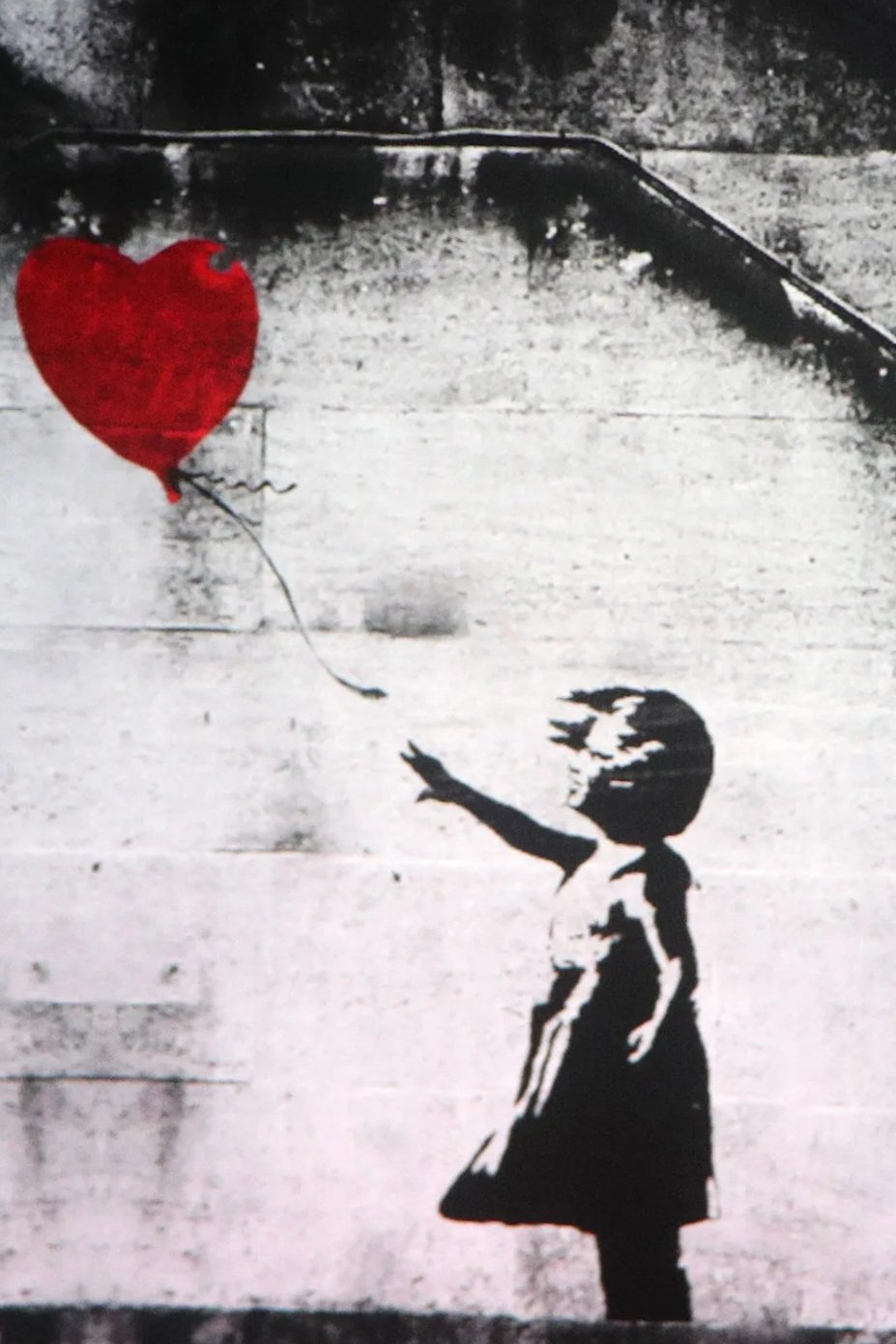
"Film is incredibly democratic and accessible, it’s probably the best option if you actually want to change the world, not just re-decorate it." – Banksy
Art. Social Change, & Uncomfortable Conversations by Marquese McFerguson
This TED Talk is the first video I watched about music (art) and society. The talk discusses how art isn’t just mere aesthetics but can be a catalyst for social change. Where artistic attempts- big or small- can provoke social change and inspire people to think creatively and differently outside the box. In this talk, he used one illustrative metaphor of sunglasses and described how different people view the world through different lenses and shades shaped by our culture and life experience. Therefore, our perspective through these shades filters how we interpret people and events. Where this metaphor could be countered by the use of art. Just like how sunglasses can be put on somebody else’s eyes, art can also convey different stories, allowing people to view their world through the narrative of the art.
Marqueses McFerguson shared his anecdote of how he used art and storytelling to help a group of young men tell their stories and create social change. Helping these young men tell their stories of growing up as Asian Americans living in the southern United States. He asked them about their experiences and the different stereotypes they’ve faced, and times they felt that they were never accepted as being American, but also not fully accepted as being asian. Then, McFerguson helped create a poem out of these experiences and then made a short film out of the poem. This film was then submitted to a conference by a teacher. The short film then premiered at the Asian American conference to hundreds of students and received only positive praises and reviews. As all the students could relate to this short film, believing that it was their own story. Just like their own shade of sunglasses. However, after the premiere, it was the most stunning to McFerguson when he showed this short film to students who weren’t Asian American. This was able to spark uncomfortable conversations and gave awareness to other students from other cultures, similar to putting on somebody else’s sunglasses. Although the students who weren’t Asian American did not face the same experiences as the short film. But they felt a similar resemblance to this film and the experiences that caused them to see similarities within each other. This film, therefore, became a catalyst for social change as different students were able to wear each other’s sunglasses and view the world differently.
Art as activism by Marcus Ellsworth
Marcus Ellsworth is a writer and spoken word artist. In this talk, he talks about how art can bring change, engagement and motivation to the world. He gives examples of historical events, such as WWII’s Uncle Sam, persuading young American children to fight in the war; and the Harlem Renaissance. how Black artists, poets, and musicians’ works were being seen in the world; and more. Ellsworth talks about one single interaction he had with another artist that allowed him to think and look at his art and the art of others, realising that art is not just for aesthetics or entertainment, but it is a stimulant for connection to other people. Art can make people think and change their views on a particular subject. Which is why Ellsworth uses his art to connect with other people and is involved in a variety of organisations and movements. Therefore, with this message, he encourages people to tell their truth, their form of art, and use this creative expression to tell the truth with no censorship. He wants people to tell the truth in forms of art with the intent to change the world with their views, and the intent to connect to other people. Ellsworth then delivers his monologue, his form of art, to state his cause and his needs to change the world. Therefore, Ellsworth's talk is a reminder that art is not just a reflection of society, but an instrument that can help shape societies.
The Bare Maximum by Steve Lacy
From the bedroom to working in the studio with the likes of Kendrick Lamar, J. Cole, Tyler the Creator and more, Steve Lacy’s story has influenced many young artists-like me=that there is no such thing as a “right” way to start creating music. Lacy’s story in this TED Talk shows that talent, authenticity and curiosity matters more than expensive set-ups and propper technical training.
In this TED Talk, Lacy explains about his love for music production and about how he fell into a music production rabbit hole from observing the people around him both offline and online. He then continues about how his curiousity in music led him to discover the music production app Garageband on his newly-bought iPhone 6, instead of waiting for the “perfect” set up to start creating music, he used only his phone, headphones and a plugged in guitar into his iRig interface. His music style was minimal, yet effective. In this talk he introduced a song he made called Dark Red. Which has since become one of his most recognisable songs with over 1.6 Billion streams on Spotify. Steve’s lesson highlights that you should use what you have to your advantage, and limitations like these could spark originality.
Also, in the beginning of this Ted Talk, Lacy seemed shy and bashful when he first spoke about the origins of how he started creating music. However, when he began showing his demos “Dark Red” and “Curse” (which he produced when he was 16), he began showing his true colours, looking “carefree and excited” as one comment on YouTube mentioned. It’s a powerful reminder that introverted artists can drive social change, using their creativity to overcome their shyness and insecurities in order to connect with others.
Course Review
What is Happiness at Work? by BerkleyX
Emiliana Simon-Thomas and Dacher Keltner
What is Happiness at Work?
This chapter is an orientation about the two teachers, Emiliana Simon-Thomas and Dacher Keltner and how they define happiness at work. In which Emiliana Simon-Thomas began defining first, what is not happiness at work: She explains that happiness is not "momentary emotions like amusement, enthusiasm, pride, or relief”, and it is also not “ maintaining a state of perpetual cheerfulness or a continuous stream of positive emotional experiences”. Therefore, in this chapter, she explains that happiness at the workplace is not a feeling of pleasure or when individual desires are met.